
Ken Marschall is the world’s foremost painter of Titanic artwork. His unique style with a paintbrush is so detailed it is often mistaken for photographs. His work has graced the covers of Time, Life, and National Geographic magazines. Ken has also illustrated numerous books, many for Dr. Robert Ballard, and has accompanied the legendary explorer on expeditions to Lusitania and Britannic. He has also explored the Titanic on expeditions led by filmmaker James Cameron. Through firsthand exploration of these famous ships in a submersible, Ken gained a unique insight into what these shipwrecks look like and “feel” to the explorer, enabling him to bring his impressions to life in his paintings. Although his Titanic paintings are his legacy, Ken has painted other famous passenger liners, naval vessels, airships, and shipwrecks. A shared shipwreck experience is how we met.
In 2003, I was working on a History Channel program about the wreck of the Andrea Doria. We wanted to show the viewers what one person can never see underwater: the entire shipwreck in one big picture. Shipwrecks age, and as they do, they can either open up areas for investigation, or forever erase the chance to determine what happened if they deteriorate and break down. Based on my dives and video of the shipwreck on the seafloor, I watched with fascination as Ken updated his 1991 painting of the infamous passenger liner’s current condition. When compared to his previous two paintings of the wreck, it provided an accurate forensic assessment of the rapid breakdown of this great ship.

Andrea Doria 1956

Andrea Doria 1991
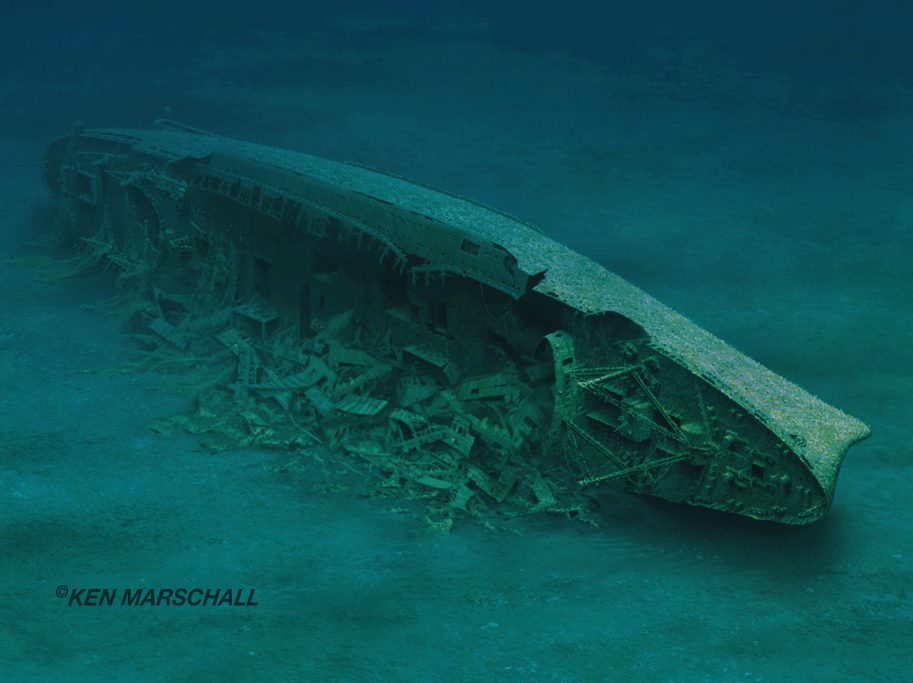
Andrea Doria 2003
Working in 2005 and 2006 on first the wreck of Titanic and then Britannic, Ken’s illustrations were used both as a guide for exploration and as a forensic tool by me and my team. When the time came to illustrate the cover of my new book, I had a vision of what I wanted and knew Ken would be the only person who could make that come to life.
My “Behind the Cover” began with the idea of illustrating a statement Jacques Cousteau made in his 1978 documentary film Calypso’s Search for the Britannic. Shortly after discovering and exploring the massive liner in 1976, Cousteau said that he and his men were like “fleas on an elephant.” At almost 900 feet long and standing 100 feet off the seafloor, everything about this wreck is massive, but I felt the stern section, with the huge triple propellers, would be the best image to convey a sense of scale of how big this ship really is.
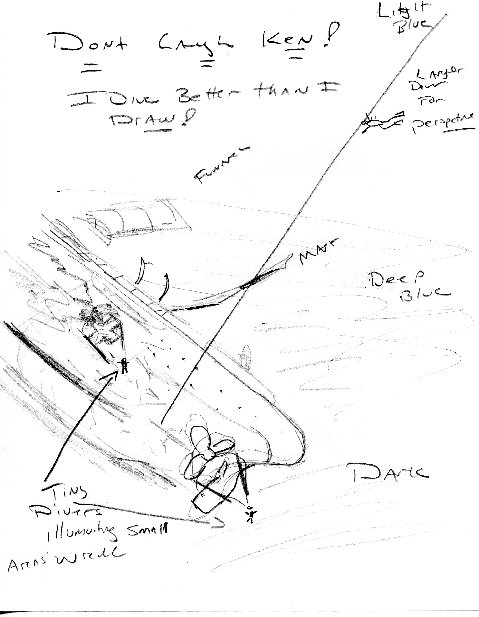
My original sketch to Ken.
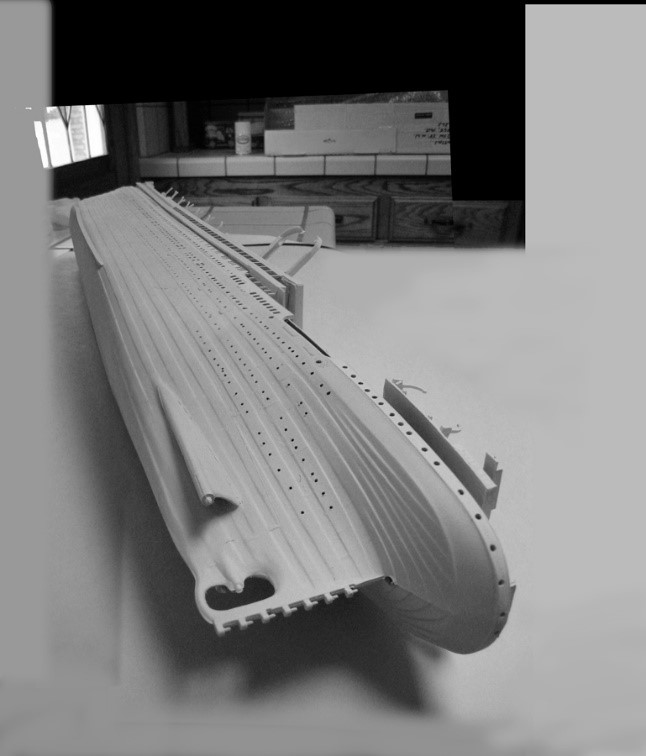
The Titanic hull model used to determine the best angle to show the propeller and Red Cross.
Ken is a stickler for accuracy, and despite his own hours exploring the wreck in the nuclear research submarine NR-1, he wanted this painting to reflect the most up-to-date information possible. Ken reviewed underwater video and photographs from numerous expeditions to not only clarify the physical features of Britannic itself, (which thankfully has stayed remarkably static), but of environmental factors that would play into the painting as well.
Things we as divers might take for granted, Ken accounted for—changing light in the water column, water clarity, the angle of the sunlight at a certain time of day, and even the way the ocean currents can tug on the line and pull the divers’ bubbles away.
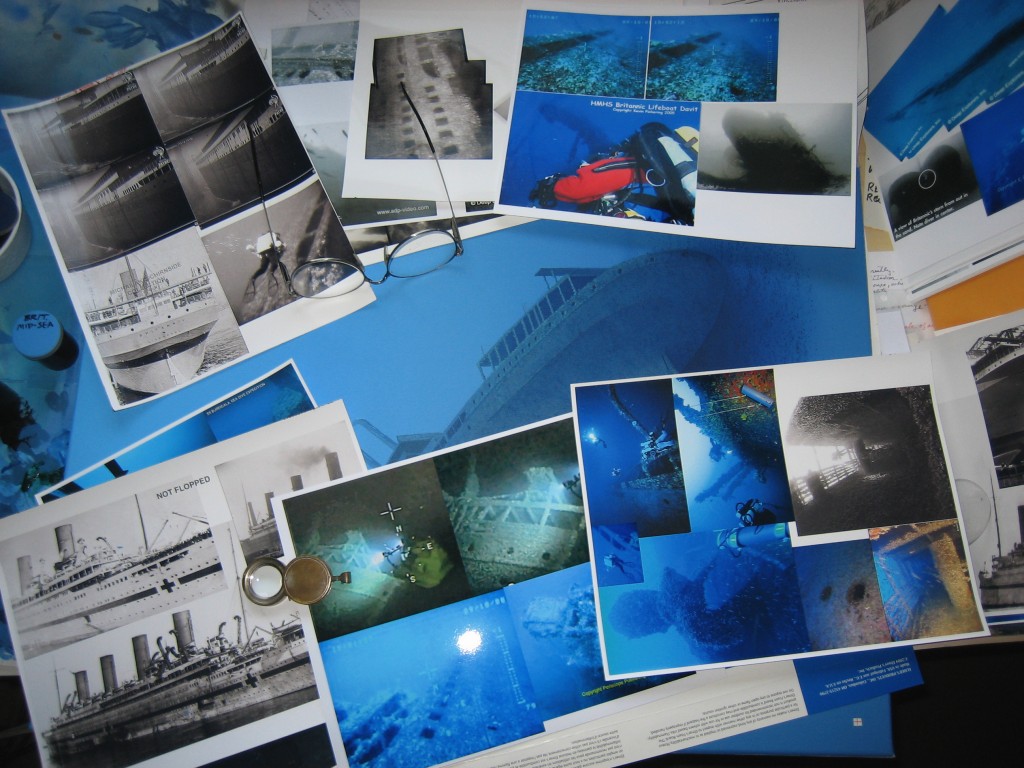
Some of the resource material Ken used to paint the cover surrounds the painting in progress.
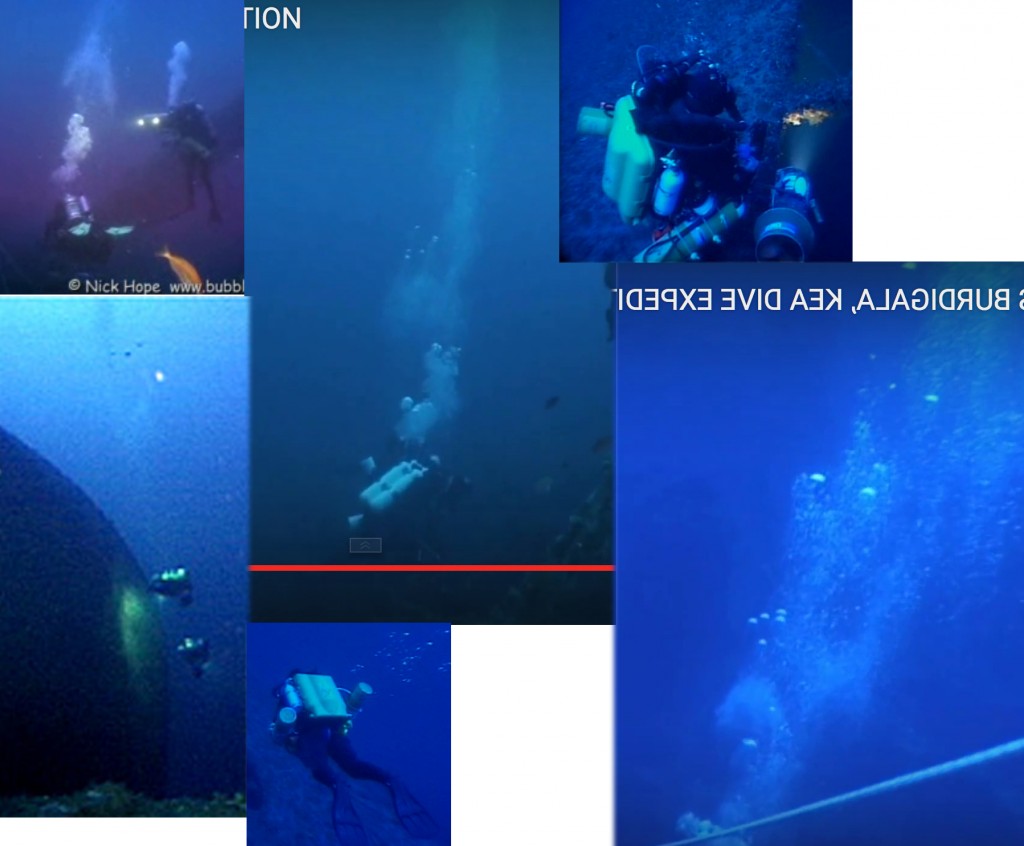
Some of the photos of divers on Britannic used to determine bubble size and shape.
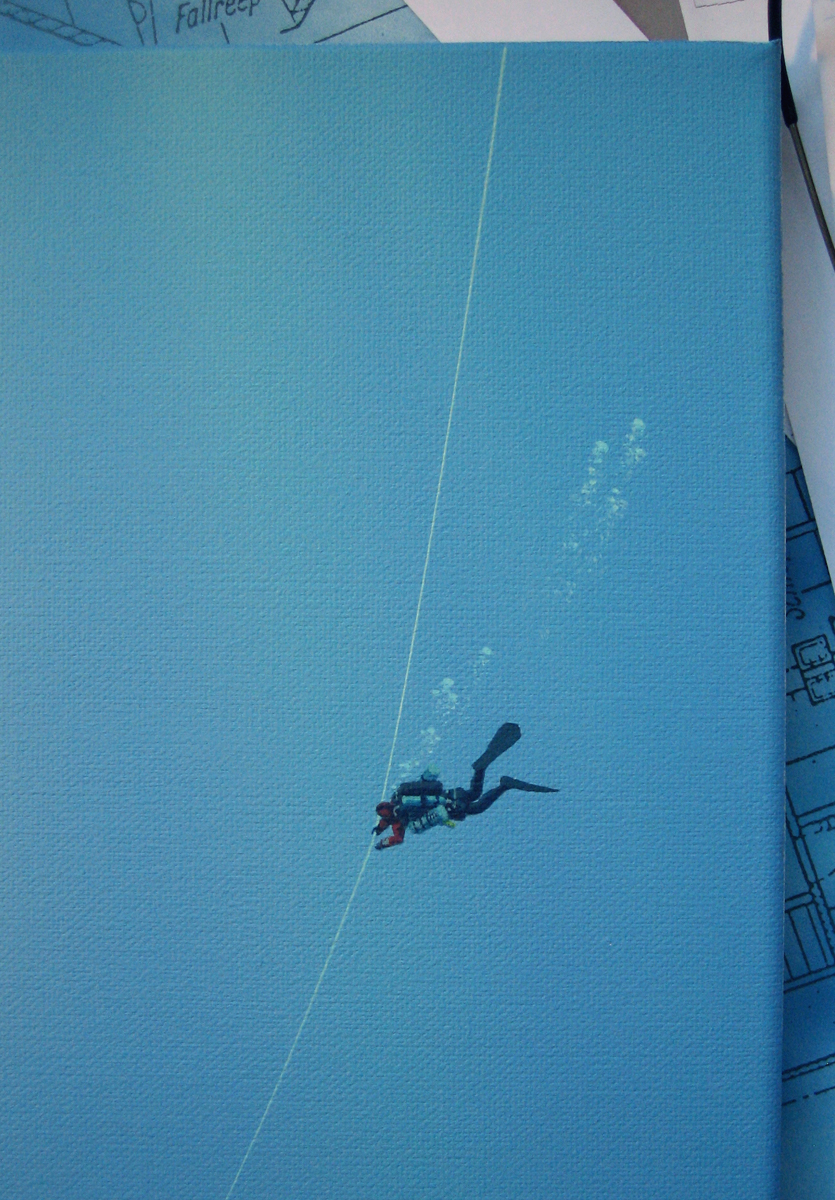
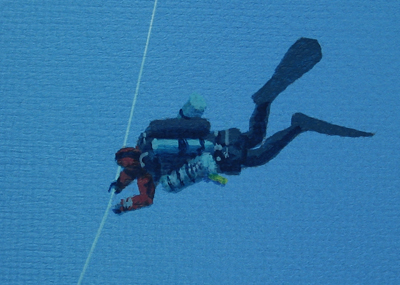
It amazes me the way Ken sees color and blends the shades of acrylic paints on the pallet to get the correct subtle nuance of hue and depth in the water . . .
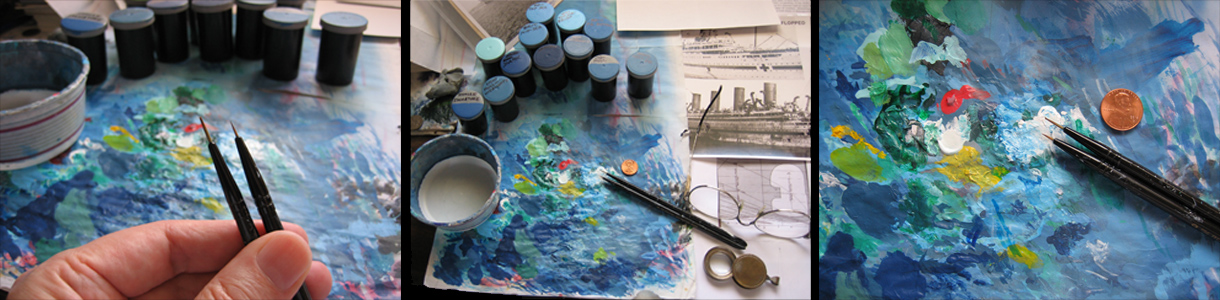 . . . and uses such tiny brushes to achieve the level of fine detail that is the signature of his work.

I encourage you to look at Ken’s art work on his website www.KenMarschall.com . A selection of his original paintings are available for purchase, and he accepts private commissions as his schedule permits. You will not be disappointed!
Richie Kohler
October 2015